

The Art of Grounded Living: Five Ways to Feel Safe and Present
To be grounded is to feel like you have a home inside your own body — a place you can return to no matter what is happening around you. It’s a sense of steadiness that doesn’t depend on everything being calm or perfect. Instead, it’s the quiet knowing that you can meet the moment as it is. Being grounded is not a personality trait or a fixed state; it’s a practice, a relationship, a way of inhabiting yourself with presence and compassion – it’s an art. It’s the opposite of being swept away by overwhelm, urgency, or the expectations of others. When you are grounded, you feel your feet on the earth, your breath in your chest, and your awareness anchored in the here and now.
Grounded is Deeply Physical
Groundedness is deeply physical. It lives in the body long before it becomes a thought. You feel it in the slow exhale that softens your shoulders, in the way your spine lengthens when you pause, in the warmth that spreads through your chest when you finally stop rushing. The body is always trying to bring you back to this place — a place where your nervous system can settle, where your senses can open, and where you can feel the world without being overwhelmed by it.
It is the moment you shift from reacting to responding — a subtle but powerful change that begins in the body long before the mind catches up. When you’re reacting, your system is braced, alert, and scanning for what might go wrong. But when groundedness arrives, even for a breath or two, something inside you softens. Your shoulders drop, your jaw loosens, and your breath becomes a little deeper without you forcing it. It’s the moment your nervous system recognises that you are not in danger right now, that you can pause, feel your feet, and choose your next step with intention rather than urgency. This shift is not dramatic; it’s quiet, almost invisible — but it changes everything.
Groundedness is a physiological “yes” to safety, even if life is still complex, uncertain, or emotionally charged. It doesn’t mean everything is fixed or easy. It means your body has found a small island of steadiness within the waves. In this state, you can hold your emotions without being swept away by them. You can stay present with what’s happening instead of spiralling into what‑ifs or old patterns. Groundedness gives you access to clarity, compassion, and choice — the inner resources that are hardest to reach when you’re overwhelmed. It’s a gentle homecoming to yourself, a reminder that even in the midst of challenge, you can return to a place of inner steadiness again and again.
The Emotional Strength of Being Grounded
Groundedness is also emotional and relational. It’s the felt sense of being connected — to yourself, to others, and to the world around you. When you are grounded, your inner voice becomes clearer, not louder. You can sense what you need, what you feel, and what matters most without having to push or strain. There’s a quiet honesty that rises when you’re rooted in yourself. You can recognise when something feels nourishing and when it doesn’t. You can notice the early signals of overwhelm before they sweep you away. This inner clarity makes it easier to hold your boundaries with kindness rather than defensiveness, because you’re no longer operating from fear, urgency, or old survival patterns.
Groundedness also transforms the way you show up in relationships. Instead of reacting from old wounds or rushing to meet expectations, you can respond from a place of steadiness. You’re able to stay connected to your values even when the world feels chaotic or emotionally charged. This doesn’t mean you never wobble — it means you can return to yourself more quickly and with more compassion. Groundedness becomes a kind of inner anchor, a quiet confidence that you can come home to your own centre again and again. It’s the relational safety that grows when you trust your own presence, and it allows you to meet others with more openness, empathy, and ease.
The Spiritual Aspect of Being Grounded
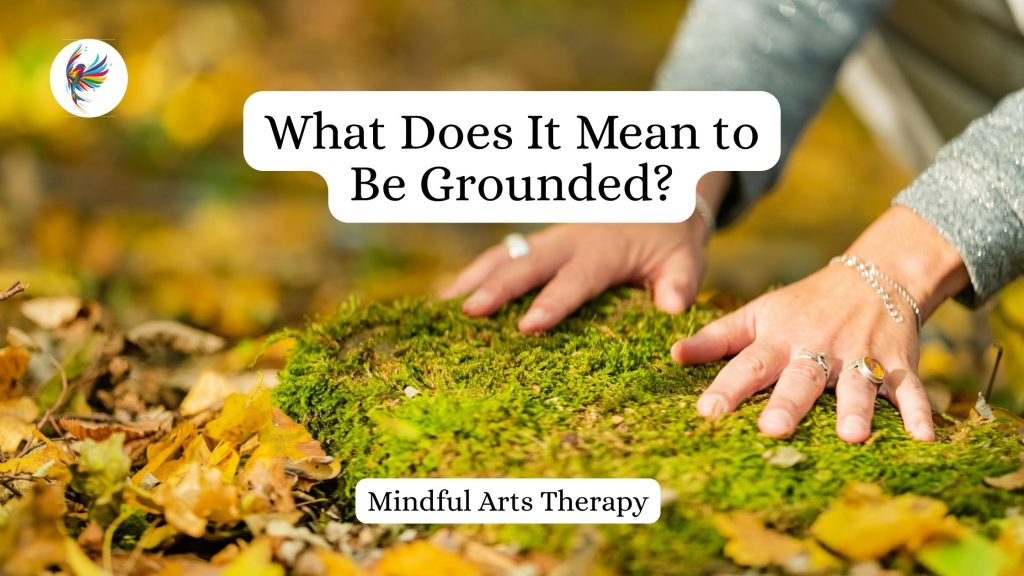
Groundedness also has a spiritual dimension — not in a religious sense, but in the way it connects you to something larger than your individual worries. It’s the quiet shift that happens when you stand under a wide sky and feel your breath naturally deepen, or when your hand rests on the bark of an old tree and you sense its steady presence beneath your palm. These moments remind you that life is unfolding all around you, with or without your effort. They offer a perspective that is bigger, older, and more enduring than the thoughts that crowd your mind. In these simple encounters with nature, you’re invited out of the tightness of your inner world and into a wider, more spacious awareness.
This kind of groundedness is the sense of being held by something beyond yourself — the rhythm of waves, the steadiness of the earth beneath your feet, the gentle rise and fall of your breath. It’s a reminder that you are part of a living, breathing world that supports you without asking anything in return. When you connect with these natural rhythms, your nervous system softens, your mind quietens, and your body remembers its place in the larger web of life. Groundedness becomes less about controlling your experience and more about allowing yourself to be supported by the simple, reliable forces that have always been there: nature, breath, rhythm, connection.
Being Grounded and Emotionally Resilient
To be grounded is not to be calm all the time. It doesn’t mean you float through life unbothered, endlessly patient, or perfectly regulated. Grounded people still feel grief, frustration, fear, and uncertainty — sometimes intensely. The difference is that they can feel these emotions without losing themselves in them. Instead of being swept away by the storm, they can stay connected to their breath, their body, and their inner steadiness. Groundedness gives you the capacity to stay with your experience rather than escape it. It’s the ability to say, “This is hard, and I’m still here,” without collapsing into self‑blame or spiralling into panic. It’s a soft strength, not a rigid one.
This kind of groundedness is resilience without hardness, strength without rigidity, presence without pressure. It allows you to move through difficult moments with more clarity and compassion, both for yourself and for others. When you’re grounded, you don’t have to pretend everything is fine — you simply trust that you can meet what’s here without abandoning yourself. You can feel deeply and still remain anchored. You can wobble and still return to centre. Groundedness becomes a quiet inner companion, reminding you that you are capable, resourced, and connected, even when life feels overwhelming.
Art Therapy and Being Grounded
Groundedness is also deeply creative. When you are grounded, your nervous system settles enough for intuition, imagination, and inner wisdom to rise to the surface. Instead of pushing or forcing ideas, you can hear the quiet impulses that guide your creative choices — the colour that calls to you, the mark your hand wants to make, the image that arrives like a soft knock. Groundedness creates the internal spaciousness where creativity can breathe. It shifts you out of urgency and into presence, where your creative voice becomes clearer and more trustworthy.
Creativity thrives in groundedness because groundedness creates safety, and safety creates openness. When your body feels steady, your mind becomes more curious, playful, and receptive. You’re no longer trying to get it “right” or impress anyone. You’re simply following the thread of what feels true in the moment. This is where the most authentic creative work emerges — not from striving, but from listening. Groundedness gives you permission to explore without fear of getting lost, to make intuitive choices without second‑guessing, and to let your art unfold at its own pace.
When you feel rooted, you can express yourself with more honesty and less self‑judgment. You can take creative risks because you trust that you can return to your centre if you wobble. Groundedness becomes the anchor that allows you to move freely. It’s the foundation beneath experimentation, the quiet confidence beneath intuition, the steady breath beneath inspiration. In this way, groundedness and creativity are not separate experiences — they are partners, each supporting the other.
Example: Imagine sitting down to draw after a long, busy day. At first, your mind is noisy and scattered. But then you place your feet on the floor, take a slow breath, and feel your body settle. As you exhale, you notice you’re drawn to a deep blue pencil. You don’t know why — it just feels right. You make a single curved line, then another. Slowly, the marks begin to form a shape that surprises you. You weren’t planning anything; you were simply grounded enough to follow the impulse. What emerges is not just a drawing — it’s a conversation with your inner world, made possible because you were steady enough to listen.
5 Tips to Keep You Grounded
1. Come back to your body
Groundedness begins with noticing physical sensations. Feel your feet on the floor, your hands resting where they are, your breath moving in and out. Even thirty seconds of awareness can shift your nervous system from scattered to steady.
2. Slow your pace intentionally
Choose one thing to do more slowly — making tea, walking to the letterbox, washing your hands. Slowness signals safety to the body and helps you reconnect with the present moment rather than rushing through it.
3. Use nature as an anchor
Step outside or look out a window. Notice one natural element: a tree, a patch of sky, a bird, a breeze. Let it remind you that you are part of something larger, steady, and ongoing.
4. Name what is true right now
Say (out loud or silently): “I am here. I am safe enough. I am allowed to pause.” Naming your reality helps interrupt spiralling thoughts and brings your attention back to the present.
5. Create a small ritual of return
Choose a simple practice that signals “I’m coming back to myself.” It might be lighting a candle, touching a meaningful object, or placing a hand on your heart. Repetition builds familiarity, and familiarity builds groundedness.
In Conclusion
Ultimately, to be grounded is to be in relationship with yourself — a relationship built on awareness, compassion, and presence. It’s a practice of returning, again and again, to the body, the breath, and the moment you’re in. It’s a way of living that honours your humanity rather than fighting it. Groundedness doesn’t remove life’s challenges, but it changes the way you move through them. It gives you a centre to return to, a place of steadiness inside the storm.
Being grounded means you are here — fully, gently, and with your whole self. It means you are connected to your body, your breath, your values, and the world around you. It means you can feel deeply without being swept away. And in a world that constantly pulls us outward, groundedness is a quiet act of rebellion — a way of choosing presence over pressure, connection over chaos, and truth over noise.
Listen to this article
Groundedness isn’t about getting everything right or holding life together with sheer effort. It’s the practice of returning to yourself with kindness — again and again. Through simple, creative, body‑based practices, we explore how to gently anchor your attention, soothe your nervous system, and create small pockets of safety right in the middle of whatever your day is asking of you. These are tools you can carry into your routines, your relationships, and your inner world.
Take a slow breath. Let your shoulders soften. Allow this space to be a quiet sanctuary — a moment to pause, reconnect, and remember that steadiness and support are allowed to belong to you.
Let’s begin.
