

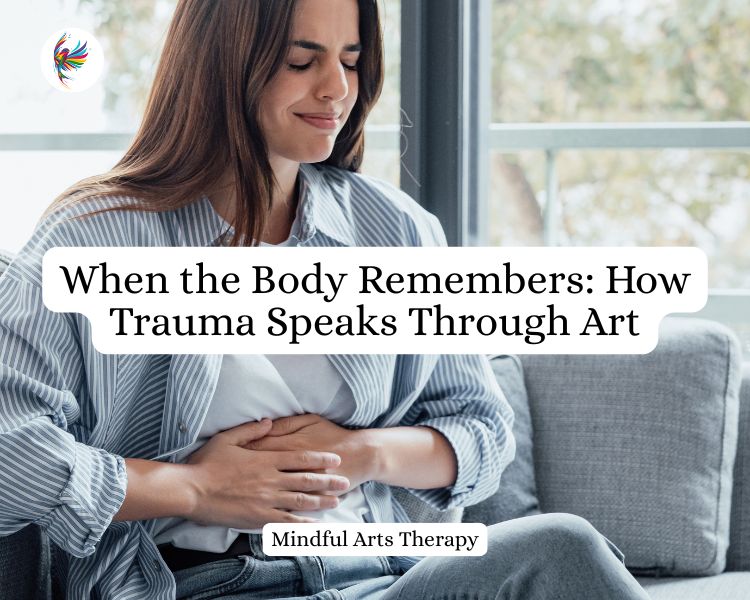
When the Body Remembers: How Trauma Speaks Through Art
In The Body Keeps the Score, Bessel van der Kolk explains that trauma does not stay neatly contained in your thoughts. Instead, it settles into your body and quietly shapes how you breathe, move, react, and relate to the world around you. Even long after an experience has passed, your body can hold onto its echoes; it remembers. You might notice tension in your shoulders, a tightness in your chest, a sudden rush of emotion, or a sense of disconnect that is difficult to explain. You may try to think your way out of these sensations, but your body often remembers what your mind has learned to silence.
Art gives those memories a safe and expressive way to surface. When you choose a colour, make a mark, or tear a piece of paper for collage, you are offering your body a language it already understands. Mindful Arts Therapy allows you to communicate without needing the perfect words. It becomes a gentle conversation between your inner world and the page, revealing what has been held inside at a pace that feels manageable.
In this article, you will explore how trauma is stored in your body, why it often shows itself through creative processes, and how art therapy can support healing, regulation, and deeper self-understanding.
Beth’s Story
You might recognise a story like Beth’s. She lived with IBS that had slowly become part of her everyday life, but what she didn’t realise at first was how deeply it was connected to old trauma her body had been carrying for years. Her stomach tightened whenever she felt overwhelmed, and flare‑ups often arrived during moments that seemed unrelated on the surface.
In our art therapy sessions, Beth began to explore these patterns with curiosity rather than fear. As she painted, she noticed how certain colours and shapes reflected the tension she held in her gut. Through collage and gentle creative rituals, she started to map the connection between her emotions and her physical symptoms.
Over time, art became a way for her to regulate her nervous system, soften her stress responses, and feel more in tune with what her body was trying to tell her. It didn’t replace medical care, but it gave her a compassionate pathway toward understanding and supporting her own healing.
Creative expression helped her listen to her body with compassion instead of frustration, which is exactly the kind of mind‑body connection van der Kolk highlights. Through art, she found a way to gently release what her body had been holding and to support her healing from the inside out.
Your Body Remembers Trauma
Beth’s experience reflects what Bessel van der Kolk describes in The Body Keeps the Score. Your body often carries the imprint of trauma long after your mind believes you have moved on, and symptoms like IBS can become part of that silent story. When Beth began exploring her inner world through art, she discovered that her physical discomfort was connected to emotions she had never fully processed.
Trauma often shows up in your body as sensory memory. Instead of staying contained in your thoughts, it can settle into the way you feel, move, and react. You might notice tightness in your chest, a sudden change in your breathing, or a wave of emotion that arrives before you have words for it. These sensations are your body’s way of remembering experiences that were overwhelming at the time. Even if your mind has tried to make sense of what happened, your body may still carry the imprint of those moments.
When you begin to explore these sensations through art, you give your body a safe and expressive way to communicate. Colours, textures, and shapes can reveal feelings that have been stored beneath the surface. As you create, you may notice that certain marks or movements reflect emotions you have not fully acknowledged. This process helps you understand your sensory memories with compassion rather than fear. Art becomes a gentle bridge between what your body remembers and what your mind is ready to explore.
Art Goes Beyond Words
Art therapy is a non verbal language when words feel too small or too heavy to hold what you are carrying. You might find that speaking about your experiences feels confusing or overwhelming, yet your hands know exactly what to do when you sit down with paint, pencils, or collage materials. Your body begins to express what your mind cannot easily articulate. A colour, a line, or a texture can say more than a sentence ever could. In this way, art gives you a safe and intuitive way to communicate your inner world without needing to explain or justify anything.
When you create, you are tapping into parts of yourself that exist beneath everyday conversation. Trauma often affects the areas of the brain responsible for language, which is why talking about difficult experiences can feel impossible at times. Art bypasses that barrier and allows you to express sensations, memories, and emotions through movement and imagery. You might notice that your hands choose colours that reflect your mood or that your brushstrokes mirror the rhythm of your breath. These choices are not random. They are your body speaking in a language it understands.
As you continue to work with art in this way, you begin to build a bridge between your inner experience and your conscious awareness. You learn to listen to what your artwork is telling you. You might see patterns, symbols, or themes that reveal how you have been feeling beneath the surface. This process helps you understand yourself with compassion rather than judgment. Art becomes a gentle translator, helping you make sense of what your body remembers and guiding you toward healing in a way that feels natural and supportive.
The Body Remembers – Art Therapy Heals
When you draw, your body often reveals what you are feeling before your mind has found the words. The pressure of your pencil, the speed of your lines, and the shapes you create can all reflect sensations held inside you. You might notice that your hand hesitates, rushes, or repeats certain movements. These patterns are not random. They are expressions of your inner world that rise naturally when you allow yourself to create without judgment. Drawing becomes a way for your body to speak honestly and quietly.
Colour also carries emotional weight and can reveal what you are holding beneath the surface. You may reach for soft tones when you need comfort or bold colours when you feel activated or overwhelmed. Sometimes you choose a colour without knowing why, and later you realise it mirrors your mood or a memory that has been sitting quietly in your body. Colour helps you express feelings that are difficult to name. It gives shape to sensations that live in your nervous system and allows you to see them outside yourself.
Texture adds another layer to this embodied expression. The way you tear paper, layer paint, or press materials into the page can reflect tension, softness, resistance, or release. Rough textures might show where you feel unsettled, while smooth or blended areas can reveal moments of calm. As you work with texture, you begin to understand how your body responds to different sensations. This awareness helps you connect with your emotions in a grounded and compassionate way. Through drawing, colour, and texture, your artwork becomes a map of your embodied experience and a gentle guide toward healing.
Creative Expression as a Way of Healing
Creative expression offers you a way to meet yourself with softness and curiosity. When you sit with art materials, you give your body permission to speak in its own language and at its own pace. You do not need to know what will appear on the page or why certain colours or shapes call to you. Simply beginning allows your inner world to unfold in a way that feels natural and grounded. Through this process, you can discover parts of yourself that have been waiting to be seen and understood.
As you reflect on how your body holds memories and how creativity can help those memories find a voice, you may notice a quiet pull toward deeper support. Healing trauma is not something you need to navigate alone. If you feel ready to explore your inner world with guidance, you are welcome to reach out for Personalised Art Therapy Sessions where you can move at your own pace in a safe and compassionate space.
You can also join my Art Therapy Circles, which offer a gentle community of people who are learning to listen to their bodies and express their stories through mindful creativity. Whether you choose individual support or the shared experience of the circle, you will be held with care as you continue your healing journey.
A Final Note from the Author
This article, and others in the series, are inspired by themes explored in The Body Keeps the Score by Dr. Bessel van der Kolk. The reflections, interpretations, and applications to art therapy shared here are my own, shaped by my professional experience and creative practice. This series is intended for education, support, and gentle exploration, and is not a substitute for therapeutic or medical care. If you are navigating trauma or emotional distress, please seek guidance from a qualified mental health professional.
