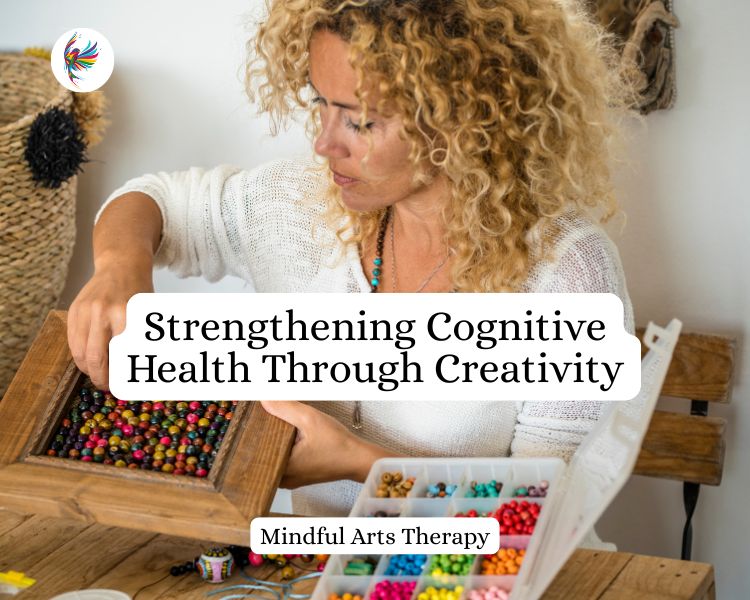
Strengthening Cognitive Health Through Creativity
Strengthening your cognitive health through creative engagement begins with the simple act of slowing down and paying attention. In mindful arts therapy, this gentle pause becomes a doorway — a way to reconnect with your inner world, support brain health, and nurture a calmer, more focused mind. When you engage in slow, intentional creativity, you’re not just making art; you’re activating neural pathways that enhance memory, mental flexibility, emotional regulation, and overall wellbeing. This kind of mindful art making invites presence rather than perfection, offering older adults and anyone feeling overwhelmed a soothing, accessible way to stay mentally active while cultivating clarity, curiosity, and self‑compassion.
Art Increases Memory and Focus
Mindful art making supports focus, memory, and mental flexibility in a way that feels gentle and accessible. When you choose to slow down and work with simple materials, you invite your mind into a softer rhythm — one that doesn’t demand performance or perfection. This shift into intentional slowness signals to your nervous system that it is safe to settle, helping your attention gather itself rather than scatter. In this quieter state, your thoughts begin to organise naturally, without pressure or force.
As you follow the movement of your hand or the colour spreading across the page, your attention narrows in a way that feels nourishing rather than restrictive. You’re not shutting the world out; you’re simply giving your mind a single, steady point to rest on. This kind of mindful focus strengthens cognitive pathways linked to concentration and memory, offering a gentle workout for your brain. The simplicity of the moment — the brushstroke, the pencil line, the soft sound of paper — becomes a grounding anchor that supports clarity and calm.
Over time, this practice builds mental flexibility. Each small decision you make on the page invites openness: a willingness to explore, to adjust, to respond rather than react. You learn to meet uncertainty with curiosity instead of tension. This adaptability supports emotional resilience and cognitive health, especially for older adults or anyone feeling overwhelmed. In this slow, deliberate creative space, your mind has room to stretch, soften, and find its own natural balance.
Art Anchoring in the Present
As you choose colours and notice the sensations in your body, your attention begins to anchor itself in the present moment. You’re not analysing or planning; you’re simply observing what is here. This soft, steady focus is deeply restorative because it gives your mind permission to rest in one experience at a time. For many women — especially those who have spent years multitasking, caregiving, and carrying invisible emotional labour — this kind of single‑task attention can feel unfamiliar at first. Yet through these small, mindful choices, you gently retrain your mind to stay engaged without strain, discovering that focus can feel nourishing rather than demanding.
Following the movement of your hand becomes a practice in presence. Each stroke invites you back into your body, back into the moment, back into yourself. The pressure of a crayon, the glide of pastel, the soft whisper of paper — these sensory details act like anchors, helping you stay grounded. With each repetition, your attention becomes more resilient. You begin to trust that you can return to the present again and again, without needing to force anything. Focus shifts from being something sharp and effortful to something spacious, calming, and supportive.
Over time, this gentle way of paying attention becomes a form of inner companionship. You learn to meet your creative process with curiosity rather than judgement, and your mind responds by softening. The more you practice, the more familiar this grounded presence becomes — like a quiet homecoming. Through mindful art making, you rediscover a way of focusing that honours your nervous system, supports your wellbeing, and reconnects you with the steadiness that has always lived within you.
Art Nourishes Your Memory
As you continue to create, you may notice that this kind of creative attention also nourishes your memory in ways that feel gentle and natural. When you explore shapes, textures, and colours, you activate parts of your brain connected to recall, association, and emotional processing. A single colour might remind you of a place you once loved; a texture might bring back the feeling of a moment you hadn’t thought about in years. These sensory cues help memories surface with more clarity and ease, not because you are trying to remember, but because the creative process naturally invites them forward.
As you follow these associations, the page becomes a bridge between past and present. You begin to reconnect with experiences, strengths, and parts of yourself that may have felt distant or forgotten. Sometimes a memory arrives softly, like a warm familiarity. Other times it comes as a realisation — a reminder of who you were, what you’ve lived through, or what still matters to you. This kind of remembering is not overwhelming; it is grounded in the safety of the creative moment. You stay anchored in your body while gently touching the threads of your own history.
This gentle stimulation keeps your mind active in a way that feels comforting rather than demanding. Instead of forcing yourself to recall details or analyse your past, you allow memories to arise organically through colour, movement, and sensation. This strengthens your cognitive pathways while also deepening your emotional connection to your own story. Mindful art‑making becomes a way of honouring your memories — not by holding onto them tightly, but by letting them flow through you with softness, presence, and trust.
Art Invites Mental Agility
Mindful art‑making also encourages mental flexibility, inviting your mind to loosen its grip on rigid expectations and familiar patterns. Each mark you make becomes an opening — a small doorway into a new possibility. When you allow yourself to follow a colour, a shape, or a movement without overthinking it, you practise shifting direction with ease. This gentle willingness to explore helps your mind stay fluid rather than fixed, reminding you that creativity thrives in spaciousness, not certainty.
As you continue to create, you begin to feel how each choice opens a new direction. There is no single correct path, no outcome you must achieve. Instead, you are guided by curiosity, intuition, and the unfolding moment. This kind of exploration strengthens your ability to adapt, both on the page and in your daily life. You learn to pivot, to experiment, and to stay open to what emerges — qualities that support emotional resilience and cognitive health. The more you practise this flexibility in your art, the more naturally it begins to show up in the way you respond to challenges and change.
Instead of feeling pressured to perform, you experience creativity as a nourishing space where your mind can stretch, soften, and grow at its own pace. The page becomes a place where you can try something new without fear, where mistakes are simply part of the journey, and where each moment of openness strengthens your inner capacity to navigate life with greater ease. Through mindful art‑making, you discover that flexibility is not about bending yourself to meet expectations — it is about allowing yourself to move freely, with curiosity and trust, in the direction that feels true.
As you follow the movement of your hand, you may find yourself experimenting with new colours, unfamiliar shapes, or unexpected textures. These small acts of exploration strengthen your brain’s ability to shift perspectives and try new approaches. Eventually, this builds cognitive agility — the capacity to move between ideas, adjust to change, and respond to challenges with greater ease. Creative engagement becomes a gentle workout for the mind, one that feels soothing rather than demanding.
Staying Present with Art
This process also supports your ability to stay present. When you focus on the sensation of a brush moving across paper or the way a colour blends into another, your mind naturally returns to the moment. This presence strengthens neural pathways associated with attention and awareness. You may notice that you feel more centred, more grounded, and more able to concentrate in other areas of your life as well.
In the end, mindful art‑making strengthens your cognitive health by inviting your mind into a process that is both stimulating and calming. Instead of forcing focus or pushing yourself to think harder, you engage your brain through gentle sensory experiences — colour, movement, texture, rhythm. This combination awakens your mind without overwhelming it. You stay mentally active in a way that feels spacious and grounding, allowing your thoughts to settle and your attention to naturally organise itself. This balance of stimulation and ease is what makes mindful creativity such a powerful support for cognitive wellbeing.
It also offers you a way to explore without fear. When you create without pressure, your mind becomes more willing to wander, experiment, and make new connections. You begin to notice how ideas flow more freely when you’re not trying to control them. This freedom strengthens your ability to think flexibly, recall memories with greater clarity, and stay present with what’s unfolding in front of you. Through colour and movement, you reconnect with your inner world in a way that feels safe, intuitive, and deeply human. Your mind learns that exploration can be gentle — and that growth doesn’t require strain.
Art Strengthening Your Cognitive Health
Through this practice, you cultivate focus, memory, and flexibility — not through effort, but through presence, curiosity, and the simple act of showing up for yourself with creativity and care. Each time you return to the page, you reinforce neural pathways that support clarity, steadiness, and emotional resilience. You remind yourself that your mind thrives when it is met with kindness rather than pressure. This results in mindful art‑making becoming more than a creative activity; it becomes a nourishing way of tending to your cognitive health, one soft, intentional moment at a time.
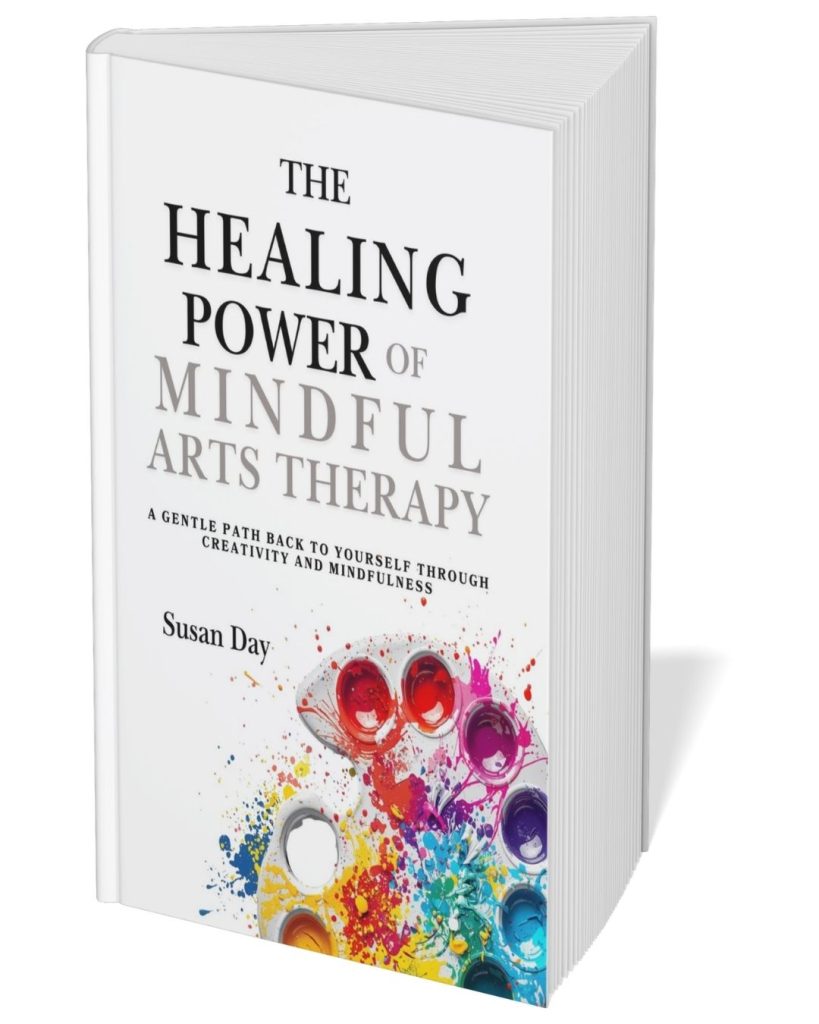
The information for this article came from The Healing Power of Mindful Arts Therapy. In it you’ll find gentle supports woven into every chapter — a reflective prompt to help you pause and listen inward, an art therapy activity to guide your hands into quiet expression, and simple meditations to steady your breath. You’ll also discover clear, accessible insights into mindfulness and arts therapy, offering both understanding and encouragement as you explore your own creative healing. If this resonates with you, the book is now available on Amazon worldwide in both print and Kindle editions, ready to accompany you at your own pace.
The Healing Power of Mindful Art Therapy